How much does a website cost in 2026? A clear price breakdown for small businesses
 By Benjamin11 min read

Ask five people what a website costs and you will hear five answers, from "nothing" to the price of a used car. They can all be right, because a website is not one purchase: it is an address, a place to run it, a design, the words and photos, and the care it needs after launch.
This guide prices each part with figures checked in November 2026, so you can see where the money goes and what year two will cost.
In short: A website can cost nothing on a free builder plan. Running your own site, expect about $12 a year for a .com domain, hosting from a few euros a month (renewals cost more) and free SSL. Labor is the big variable: a 2026 survey of German-speaking freelancers found a median of €90 an hour for software and web development, so design, content and upkeep decide your budget.
What you are actually paying for
| Part | One-time or recurring | Typical size of the cost |
|---|---|---|
| Domain name | Yearly | Small: about $12 for a .com |
| Hosting | Monthly or yearly | Small at first, watch the renewal price |
| SSL certificate | Renewed automatically | Usually free |
| Design and build | Mostly one-time | From your own time to the largest line in the budget |
| Content and photos | One-time, then updates | Your time, or a writer and a photographer |
| Maintenance | Ongoing | Your time, or hours you pay for |
Extras such as email on your domain, online payments and bookings sit on top.
How much does a domain name cost?
Your domain is the address people type, like yourbakery.com. You rent it by the year and keep it only as long as you renew it.
For .com, the registry sets the floor. Verisign, which runs .com, raised its wholesale fee for every new and renewed .com from $10.26 to $10.97 a year, effective November 1, 2026. Every registrar pays that fee, so an honest .com price sits just above it: on Porkbun's price list, a .com costs $11.81 to register and the same $11.81 to renew.
The trap is the first-year discount. On the same list, a .shop domain costs $2.06 for the first year and $31.41 to renew, and a .store goes from $2.57 to $43.77. Your real cost is the renewal price multiplied by the years you keep the name. So compare renewal prices, register the domain in your own business account (never a freelancer's), and turn on auto-renew.
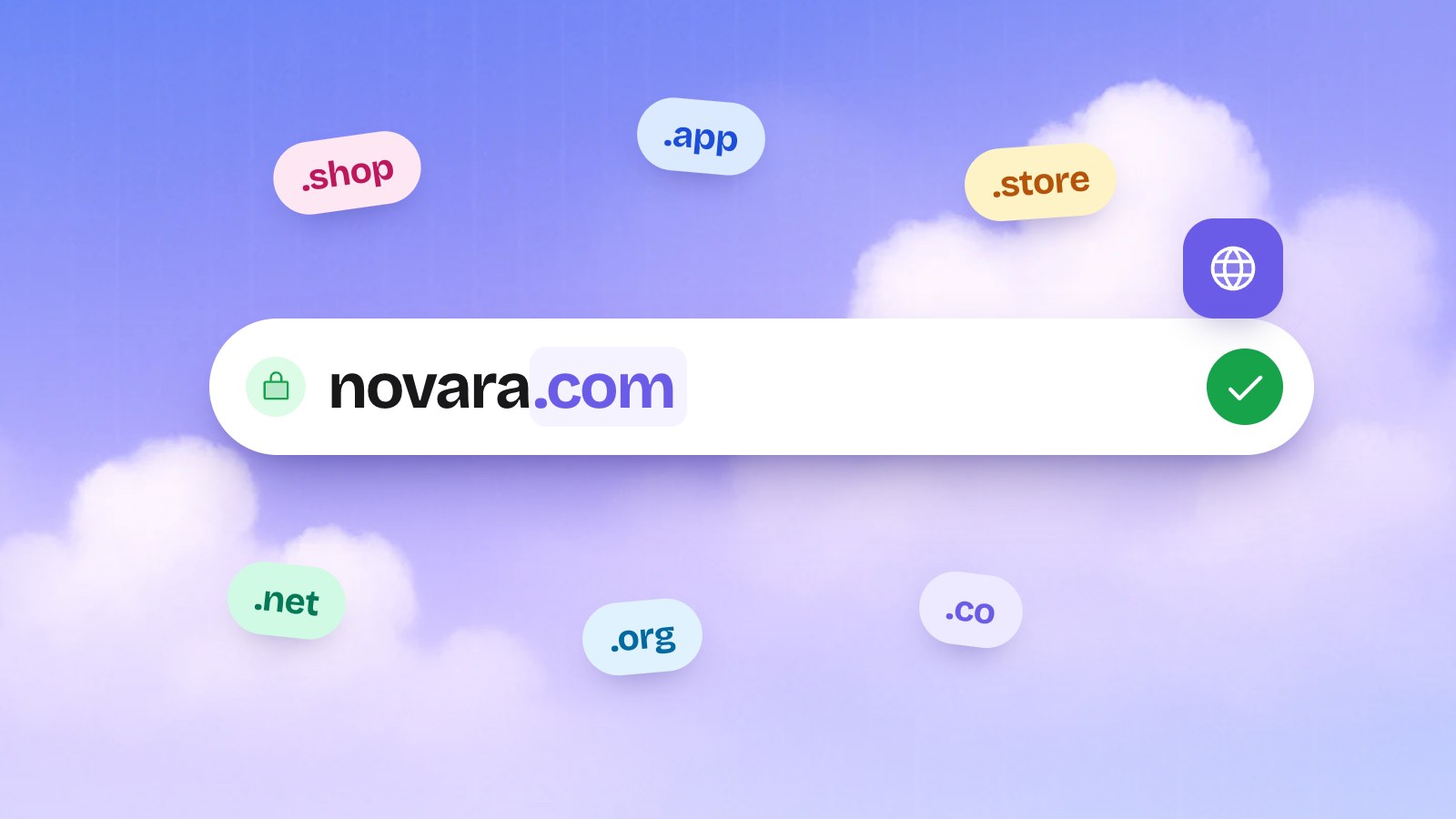
You can search and buy a domain inside our AI website builder for .com, .net, .org, .io, .co, .me, .dev, .app, .shop and .store, or connect one you bought elsewhere with DNS records. Still choosing a name? Read our guide on how to choose a domain name.
Hosting: why the second year costs more
Hosting is the computer that serves your site. Website builders include it; if you run your own site, for example with WordPress, you rent it from a hosting company.
Entry-level hosting looks cheap because of introductory pricing. SiteGround's StartUp tier on its EU site is advertised at €3.99 a month, prepaid for 12 months, and renews at €15.99 a month, both before VAT. That is €47.88 for the first year and €191.88 for the second: four times as much for the same service.
Hosting alone is an empty server: design, texts and updates are still on you. On a website builder there is no separate hosting bill, because hosting comes with the site.
Do you need to pay for an SSL certificate?
SSL (HTTPS and the padlock in the browser) encrypts the connection between your site and its visitors. Every business site needs it, and it should cost you nothing.
Let's Encrypt, a nonprofit certificate authority, issues free certificates, and from February 10, 2027 they will last 64 days by default. Renewal therefore has to be automatic, so pick a host or builder that issues and renews free SSL for you.
Design and build: website builder, freelancer or agency
The same five-page site can cost a weekend of your time, a freelancer's invoice or an agency project.
Doing it yourself with a website builder
You pay a subscription, or nothing on a free plan, plus your time. With an AI builder you describe your business, answer a few questions and get a first multi-page version to edit. Our guide to AI website builders explains what they do well and where they stop.
Hiring a freelancer
Freelancers quote by the hour or by the project. Two published figures help you judge a quote:
- In the United States, the Bureau of Labor Statistics puts the median pay of web developers and digital designers at $47.85 an hour (May 2025 data). That is employee pay: a freelancer also covers tools, taxes, holidays and unbilled hours, so their rate has to be higher to earn the same.
- In German-speaking Europe, the Freelancer-Kompass 2026 survey of 5,412 freelancers found a median rate of €90 an hour for software and web development.
Rates vary by country and experience, so use these as a yardstick. At €90 an hour, every 10 hours of work adds €900. Ask for a fixed quote that lists the pages, the revision rounds, who writes the texts and what happens after launch.
Hiring an agency
An agency puts a team on your project: a project manager, a designer, a developer and often a copywriter. You pay for that coordination and for someone accountable, so expect a higher quote than a single freelancer's for the same pages. It pays off for complex sites (several languages, links to your own systems, a brand still to be built), much less for a simple brochure site.
Cost table by option
| Option | Upfront cost | Every year after | Your time | Best for |
|---|---|---|---|---|
| Free builder plan | €0 | €0 | Low | Testing an idea, a first site, a portfolio |
| Builder with your own domain | Domain plus subscription | Subscription plus domain renewal | Low | Most small businesses |
| Self-hosted, for example WordPress | Domain, hosting, paid theme or plugins | Hosting at its renewal price, licenses, updates | High | Owners who enjoy the technical side |
| Freelancer | Hours times rate, or a fixed quote | Hosting, domain, maintenance hours | Medium | A custom design without doing it yourself |
| Agency | The highest quote | A maintenance contract | Medium | Complex or brand-heavy sites |
The further down you go, the less time and the more money you spend.
Content and photos: the line most budgets forget
- Texts. You, a copywriter paid by the hour or page, or AI writing a first draft from your own notes, menu or price list that you then correct.
- Photos. Phone photos of your real work cost nothing and show customers what they will get. A professional shoot is a one-time cost that pays off for restaurants, salons and anything visual. Generic stock images are cheap but say little about you.
- Logo. A logo can be made with AI, uploaded, or simply written as text.
Maintenance and updates: the cost that never ends
Prices, opening hours and software all change, so a website is never finished.
On a self-hosted site, updates are a security job. Patchstack's State of WordPress Security in 2026 counted 11,334 new vulnerabilities in the WordPress ecosystem in 2025, 42% more than in 2024. 91% were in plugins, and 46% had no patch when they were disclosed. Every plugin is one more thing you, or someone you pay, has to watch.
Do it yourself, pay someone by the hour, or use a builder that handles software, hosting and SSL for you. Whichever you pick, make sure you have version history and backups, so a change that goes wrong can be undone.
Extras: email, payments and bookings
Email on your own domain
An address like [email protected] looks more professional than free webmail and stays yours when you switch providers. It is usually billed per mailbox: Google Workspace listed Business Starter at €6.80 per user per month before tax in November 2026 (prices vary by country), so two mailboxes cost €163.20 a year. Some website builders include email on your own domain in their paid tier, which saves a separate bill.
Online payments
Payment fees are a cost of every sale. Stripe's standard pricing in the United States is 2.9% + 30¢ per successful domestic card transaction, with no setup or monthly fee: $1.46 on a $40 order. If you sell only a few products, payment links that customers pay on the provider's own page are a simple start before a full shop. Our guide on how to start an online shop covers the options.
Bookings and contact forms
To start, a simple booking request form that sends each request to your inbox is often enough. Dedicated scheduling tools may charge per month or per staff member, so check before you commit.
What does a free website really include?
"Free" is real, but it comes with limits. Free tiers usually mean an address on the platform's domain (a subdomain), a small platform badge on your site, caps on sites or features, and no email on your own domain.
Our free Starto plan is a concrete example: you can build and publish up to 5 websites on a free address like yourname.businesswebsite.app, with free SSL. Premium, one subscription for the whole account, adds your own domain, email addresses on that domain, no badge and up to 10 websites. Current prices are on the pricing page.
A free site is enough to test an idea or get online today. Move to your own domain before the address goes on business cards, vehicles and invoices, because changing it later means reprinting and losing saved links. With any free offer, ask whether you can connect your own domain later, remove the badge and export your site.
Hidden costs to check before you commit
- Renewal prices. Domains and hosting often renew far above the first-year price, as the .shop and hosting examples show.
- An expired domain. ICANN policy requires registrars to send two renewal reminders, roughly one month and one week before expiry. Once a registrar deletes an expired domain, you have a 30-day Redemption Grace Period to restore it, possibly for a fee. After that, anyone can register it.
- A domain in someone else's name. If a freelancer registered it in their account, you need their cooperation to move it.
- Licenses. Paid themes and plugins may need a yearly license to keep receiving updates.
- Change requests. Small edits billed by the hour add up after launch.
- Taxes. Many prices are quoted before VAT or sales tax, including the hosting and email prices above.
- Rebuilding later. Switching platforms can mean paying for a site twice, so check that you can export your content before you commit.
How to budget for your website, step by step
Step 1: decide what the site must do
Information only, booking requests or online sales? Each step up adds cost: forms to answer, payment fees, more pages.
Step 2: price the fixed yearly costs
Domain renewal, hosting at its renewal price and email per mailbox. On a builder, the subscription usually covers hosting and SSL.
Step 3: choose who builds it
Your time with a builder, a freelancer's fixed quote or an agency proposal, in writing, with pages and revision rounds listed.
Step 4: budget content and upkeep
Texts, photos and a logo once, then monthly time for updates, plus software updates on a self-hosted site.
Step 5: add up year two before you sign
Year two is your real yearly cost, because introductory prices are gone. Here is an invented flower shop, Harbor Lane Florist, running its own site at November 2026 list prices:
| Line item | Year one | Year two |
|---|---|---|
| .com domain (Porkbun) | $11.81 | $11.81 |
| Hosting (SiteGround StartUp, before VAT) | €47.88 | €191.88 |
| SSL certificate (Let's Encrypt) | €0 | €0 |
| Email, 2 mailboxes (Workspace Business Starter, before tax) | €163.20 | €163.20 |
| Card payments (Stripe, US domestic cards) | 2.9% + 30¢ per sale | 2.9% + 30¢ per sale |
| Design, content and maintenance | Your time, or hours times rate | Your time, or hours times rate |
Hosting alone quadruples in year two. For the full path from idea to launch, see our guide on how to create a business website.
Frequently asked questions
How much does a small business website cost in 2026?
Anything from nothing on a free builder plan to a full agency project. Running your own site with a .com, entry-level hosting and two business mailboxes came to about $12 plus €211 in year one and $12 plus €355 in year two, at November 2026 list prices before tax. Design and maintenance labor come on top unless you do them yourself.
How much does a .com domain cost per year?
Since November 1, 2026, the registry charges registrars $10.97 a year per .com, so retail prices sit just above that: Porkbun lists $11.81 for registration and renewal. First-year deals on other extensions can renew at many times the price.
How much should I budget for website maintenance?
On a builder, it is mostly your time for content updates, because hosting, software and SSL are handled. On a self-hosted site, set aside regular time or pay for maintenance: 11,334 new WordPress ecosystem vulnerabilities were found in 2025, most in plugins, so updates cannot wait.
Do I have to pay for an SSL certificate?
No, not for a typical business site. Let's Encrypt issues free certificates, and a good host or builder installs and renews them automatically. Paid certificates exist for special cases a small business rarely has.
Sources
- Verisign Reports First Quarter 2026 Results, Verisign, 2026.
- Domain Name Pricing, Porkbun, 2026.
- Do You Have a Domain Name? Here's What You Need to Know, ICANN, 2018.
- Web Hosting, SiteGround, 2026.
- 64-Day Certificate Lifetimes Coming Feb 2027, Let's Encrypt, 2026.
- Web Developers and Digital Designers, Occupational Outlook Handbook, U.S. Bureau of Labor Statistics, 2026.
- Freelancer-Kompass 2026: IT freelancers, freelancermap, 2026.
- State of WordPress Security in 2026, Patchstack, 2026.
- Google Workspace Pricing, Google, 2026.
- Stripe Pricing and Fees, Stripe, 2026.